Julia Fancher

Hi! My name is Julia Fancher, and I am a PhD student in astronomy and NSF Graduate Research Fellow at The Ohio State University. I am a theorist interested in winds and accretion. I work with Prof. Todd Thompson on stellar magnetic winds.

I graduated from Syracuse University with a BS in physics and applied mathematics. During my time in Syracuse, I worked on modeling tidal disruption events with Prof. Eric Coughlin. In my free time, I enjoy running, crocheting, and baking.

Research

Magnetic Winds

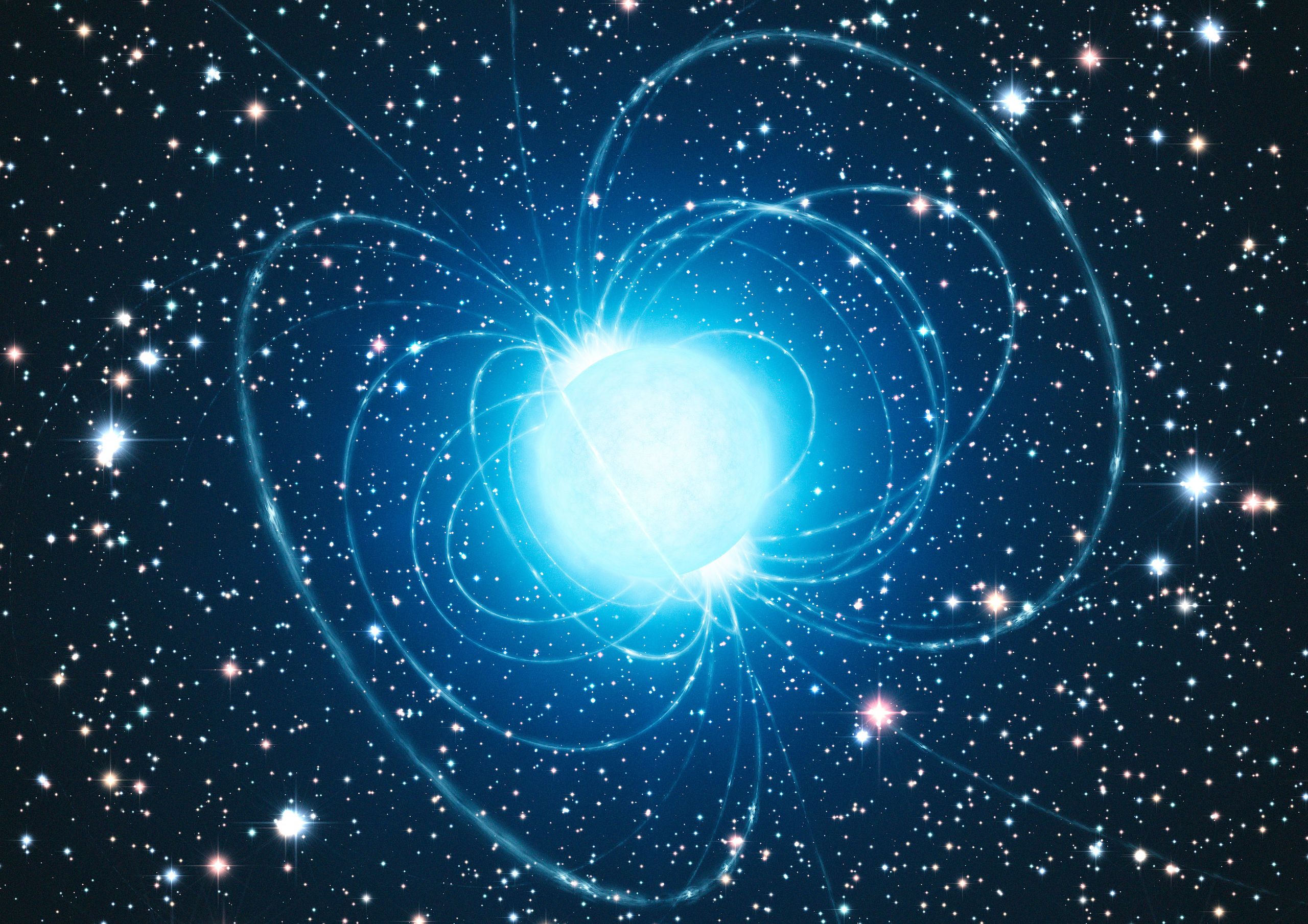
Throughout their lives, rotating stars begin to slow their rate of rotation, which is known as spindown. This occurs because stars eject a tiny fraction of their mass over their lifetime. This small amount of mass interacts with the magnetic field of the star, removing angular momentum and eventually slowing the spin of the star. I am currently working on evaluating how the structure of the magnetic field changes the spindown times of these stars. (Image credit: ESO)
Tidal Disruption Events

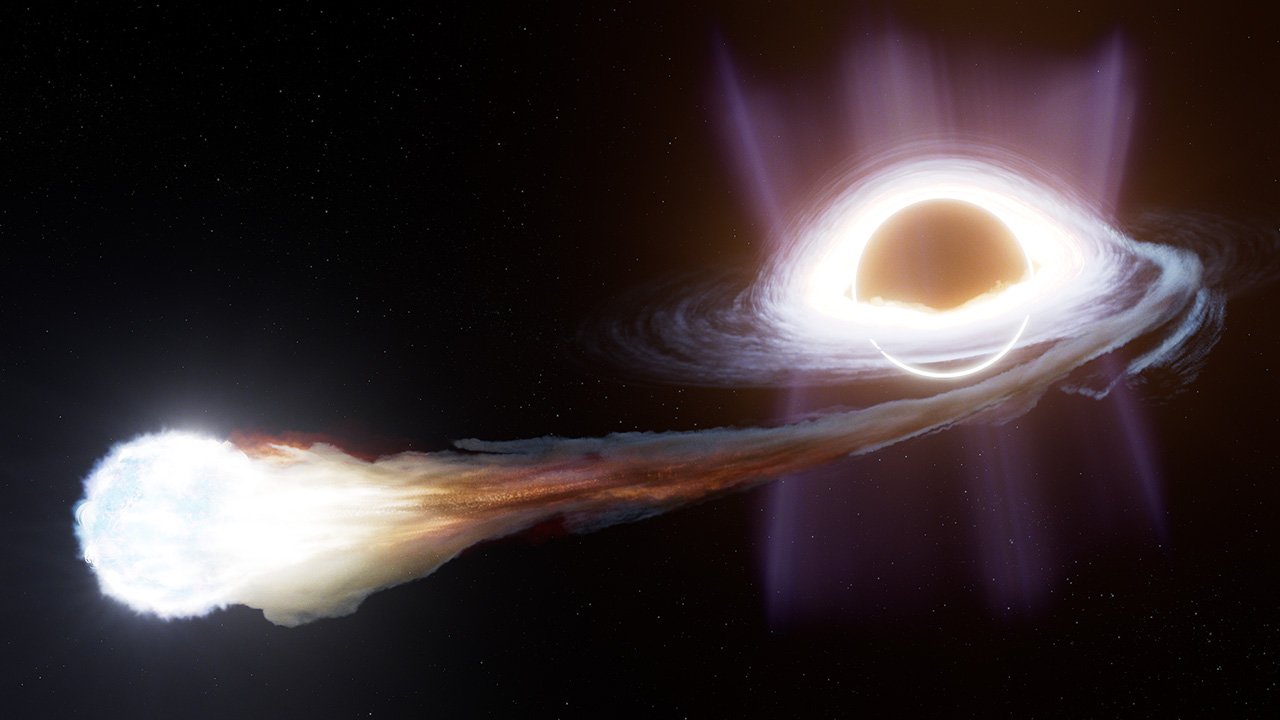
In a tidal disruption event (TDE), a star is destroyed by the tidal field of a supermassive black hole. The accreting debris creates a luminous flare. My work focused on isolating the effect of the star's self-gravity on the stellar debris stream. I evaluated mathematical models of TDEs and found that the model that includes self-gravity (the maximum gravity model) is much better at predicting the fallback rate of the TDE. (Image credit: STScI)

Isolating self-gravity
Maximum gravity model predictions
Evaluating the maximum gravity model

Contact Me